この曲についてAbout the piece
この曲は、ベートーヴェンの死から約40年後に楽譜が見つかり、1867年に初めて出版されました。「エリーゼ」がだれなのかははっきりせず、ベートーヴェンがピアノを教えた女性テレーゼの名前を読み間違えたという説がよく知られています。原本の楽譜は、今は行方がわかっていません。
The manuscript surfaced about forty years after Beethoven's death and the piece was first published in 1867. No one knows for sure who "Elise" was; a well-known theory says the name is a misreading of Therese, a pupil of Beethoven's. The original manuscript is now lost.
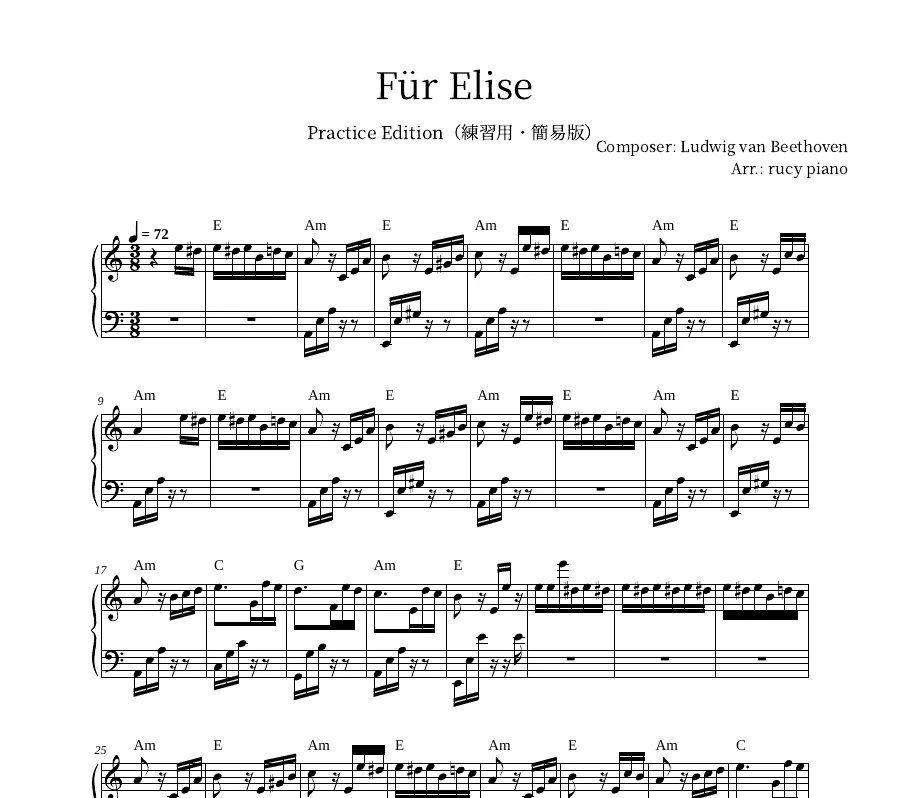
簡易版では、右手の旋律は最初から最後まで原曲どおりです。左手が高い音域で旋律に加わるところは、右手の段に書いています。中間部(第82〜99小節)だけ、右手の和音を2音に、左手の16分音符の連打を長い音にまとめました。前打音(小さな装飾の音)は省いています。
In the Practice Edition the right-hand melody is complete from start to finish. Where the left hand crosses up to join the tune, those notes are written in the upper staff. Only in the stormy middle section (bars 82–99) are the right-hand chords reduced to two notes and the repeated left-hand sixteenths turned into held notes. Grace notes are left out.
練習のコツPractice tips
- 右手の「ミレミレミ」は力を抜いて、指先で軽く。左手の分散和音は手首をやわらかく使いましょう。
- Play the right-hand E–D♯–E–D♯–E lightly from the fingertips, and keep the left-hand wrist loose in the arpeggios.
- 右手と左手が交互に音をつなぐところが多い曲です。最初はプレーヤーの速さを60%くらいにして、切れ目なく聞こえるように。
- The hands often take turns to carry the line. Start with the player at about 60% speed and aim for a seamless sound.
- 中間部の32分音符や後半のアルペジオは、まずゆっくり片手ずつ練習してから合わせます。
- Practise the quick notes in the middle and the arpeggio run near the end hands separately and slowly before putting them together.