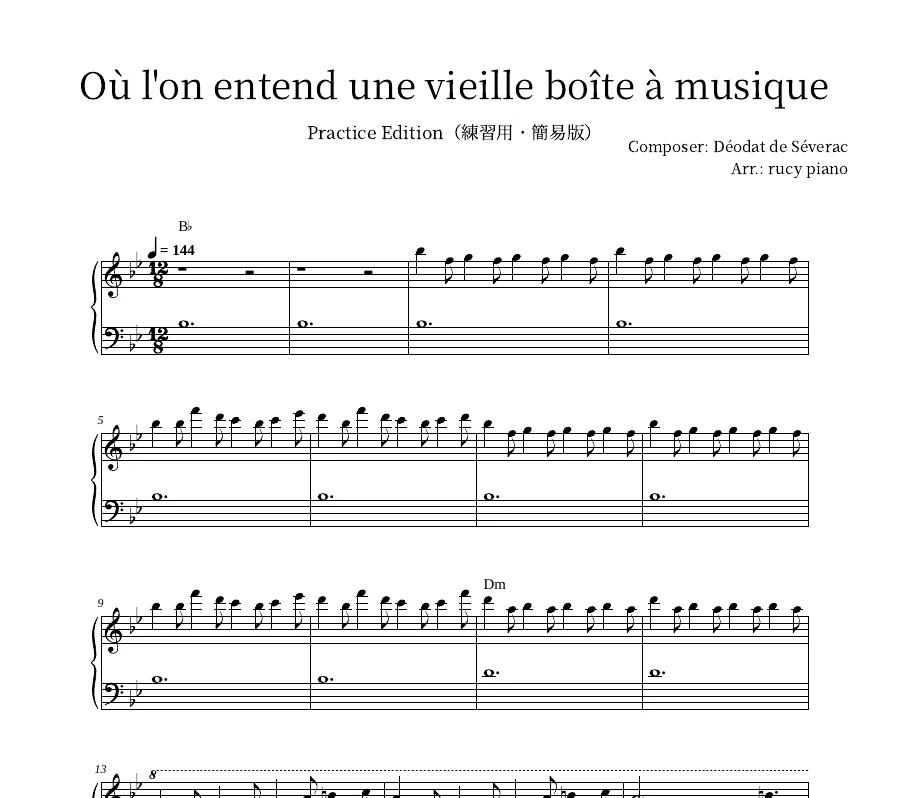
この曲についてAbout the piece
南フランス・ラングドック出身の作曲家デオダ・ド・セヴラック(1872〜1921)のピアノ曲集『休暇の日々に(En vacances)』第1集の第6曲です。曲集には「中くらいのむずかしさの、ロマン派風の小品集」という副題があり、第1集は1911年にパリのルアール・ルロル社から出版されました。
This is No. 6 from the first book of En vacances by Déodat de Séverac (1872–1921), a composer from Languedoc in the south of France. The set is subtitled "little romantic pieces of medium difficulty", and the first book was published by Rouart, Lerolle & Cie in Paris in 1911.
題名のとおり、どこかから古いオルゴールが聞こえてくる様子を描いています。右手は高い音域でこまかい音をくり返し、ゼンマイがゆるむように少しずつ表情を変えます。中ほどには半音ずつ下がっていく部分や、遠くから聞こえるような「こだま(écho)」の部分があり、最後は「できるだけ弱く」消えていきます。
As the title says, it pictures an old music box heard from somewhere nearby. The right hand repeats tinkling notes high on the keyboard, changing little by little like a winding-down spring. In the middle there is a chromatic descent and a distant "écho" passage, and the piece ends "as softly as possible".
簡易版では、原曲のいちばん上に聞こえる旋律をそのまま右手に残し、左手は長くのばす低い音だけにしぼってコードネームを付けています。原譜と同じく、13〜34小節の右手は1オクターブ高く弾く「8va」で書いています。
The Practice Edition keeps the uppermost melody exactly as written in the right hand and reduces the left hand to the held bass notes, with chord names. As in the original, the right hand in bars 13–34 is written under an 8va line (play an octave higher).
練習のコツPractice tips
- 8分の12拍子は、1小節を「大きな4拍」で数えます。8分音符3つで1拍です。
- Count 12/8 as four big beats per bar, three eighth notes to each beat.
- 右手は指を鍵盤の近くに置いて、粒をそろえて軽く。オルゴールのように、強弱をつけすぎないのがコツです。
- Keep the right-hand fingers close to the keys and the notes light and even. Like a music box, avoid big swells.
- 「8va」の部分は書いてある音より1オクターブ高く弾きます。最初はプレーヤーで高さを確かめてから練習しましょう。
- In the 8va passage play an octave higher than written. Check the pitch with the player first.
- テンポは速めです。最初はプレーヤーの速さを60〜70%に落としてから、少しずつ上げていきます。
- The tempo is quick. Start with the player at 60–70% speed and raise it little by little.