この曲についてAbout the piece
エリック・サティが1888年、22歳のころに書いた3曲の「ジムノペディ」の1曲目です。当時のサティは、パリのモンマルトルにあったキャバレー「黒猫(シャ・ノワール)」でピアノを弾いていました。題名は、古代ギリシャで若者たちが裸で踊った祭り「ギュムノパイディア」から取られたといわれます。
Erik Satie wrote the three Gymnopédies in 1888, when he was about 22 and playing piano at the Chat Noir cabaret in Montmartre. The title is usually traced to the Gymnopaedia, an ancient Greek festival of dance.
楽譜の最初には「ゆっくりと、悲しみをこめて(Lent et douloureux)」と書かれています。和音はたった2つ(GとDのメジャーセブンス)を行き来するところから始まり、劇的な盛り上がりはほとんどありません。この「何も起こらない静けさ」が、のちの環境音楽や映画音楽にも大きな影響を与えました。1897年には、ドビュッシーがこの曲をオーケストラ用に編曲しています。
The score is marked "Lent et douloureux" (slow and sorrowful). It opens by rocking between just two major-seventh chords and hardly builds to any climax. That calm, uneventful quality later influenced ambient and film music, and Debussy orchestrated the piece in 1897.
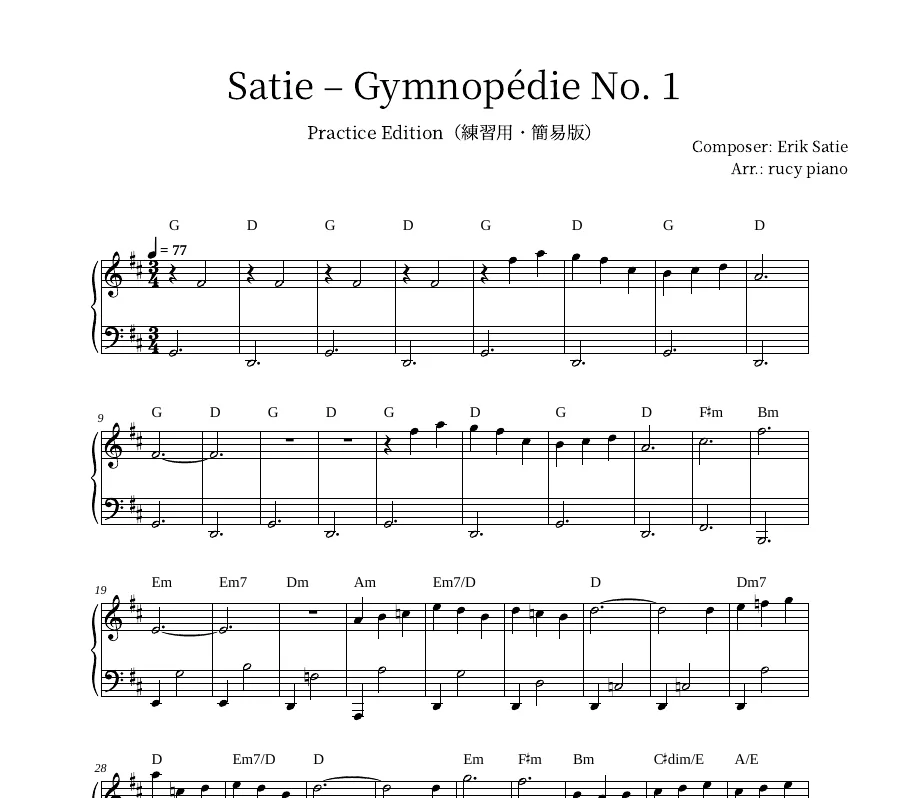
簡易版では、右手のメロディはそのまま、左手は低い音だけにしぼっています。原曲で左手が弾く和音の代わりにコードネームを付けているので、慣れてきたら和音を足して原曲の響きに近づけることもできます。
The Practice Edition keeps the right-hand melody as written and reduces the left hand to its bass notes. Chord names replace the left-hand chords, so you can add them back as you grow more confident.
練習のコツPractice tips
- 3拍子の1拍目(低い音)をしっかり、2・3拍目は軽く。「ブン・ふわ・ふわ」と揺れるように数えると、ワルツのような流れが出ます。
- Lean on beat 1 (the bass) and keep beats 2 and 3 light. Counting "boom, float, float" gives the gentle sway.
- テンポは♩=77ですが、最初は動画の「ゆっくり75%」くらいで。遅く弾いても音と音の間がとぎれないよう、ペダルを1小節ごとに踏みかえます。
- The tempo is ♩ = 77, but start around the 75% tutorial speed. Change the pedal once per bar so slow notes still connect.
- メロディの長い音は、次の音を弾くまで指を離さずに待ちます。急がないことがこの曲のいちばん大事なポイントです。
- Hold the long melody notes fully before moving on. Not rushing is the whole point of this piece.
- 同じ旋律が2回出てきます。2回目は少しだけ音を小さくすると、ひとりごとのような雰囲気になります。
- The melody comes round twice. Play the second time a little softer, like thinking aloud.